
My first real encounter with Spec-Driven Development came when I began exploring the Kiro IDE. Until then, I had never seen a development environment built so deeply around structured specifications, where the quality of the spec directly influences the quality of the code generated by AI. That experience fundamentally changed the way I think about software engineering in the AI era.
The Importance of Prompt Engineering
The domain of prompt engineering is likely necessary for every human who uses AI, and especially for software developers who use it to generate code. The better the prompt is, the more accurate and better aligned with our expectations the generated code will be.
Prompt Engineering is not Enough
Nevertheless, I realized that, when using GenAI in software development, knowing how to engineer prompts is not enough. Without structured, unambiguous requirements, AI tools might struggle to stay grounded, often drifting into hallucinations or producing results that do not fully match the intended behavior. This is precisely where the EARS methodology becomes invaluable. By transforming vague descriptions into precise, consistent requirement patterns, EARS strengthens the prompt, stabilizes AI outputs, and dramatically improves the reliability of GenAI-assisted development workflows.
The Easy Approach to Requirements Syntax
The EARS (Easy Approach to Requirements Syntax) method was developed at Rolls-Royce in the late 2000s to address a recurring engineering problem: requirements that are vague, inconsistent, or ambiguous, leading to costly misunderstandings. EARS introduces a small set of structured templates that make requirements clearer, more consistent, and easier to validate. Originally designed for safety-critical systems, EARS quickly gained traction across industries and is now widely used in software engineering. Its simplicity and precision make it especially valuable today, as AI-assisted development tools depend heavily on well-structured, unambiguous specifications.
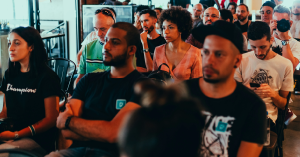
The new “Mastering EARS” seminar expands the suite of AI-focused seminars I have already developed. It is the first in a series of upcoming workshops and seminars designed to empower software developers to use GenAI effectively and confidently in this new era of AI-driven software engineering.